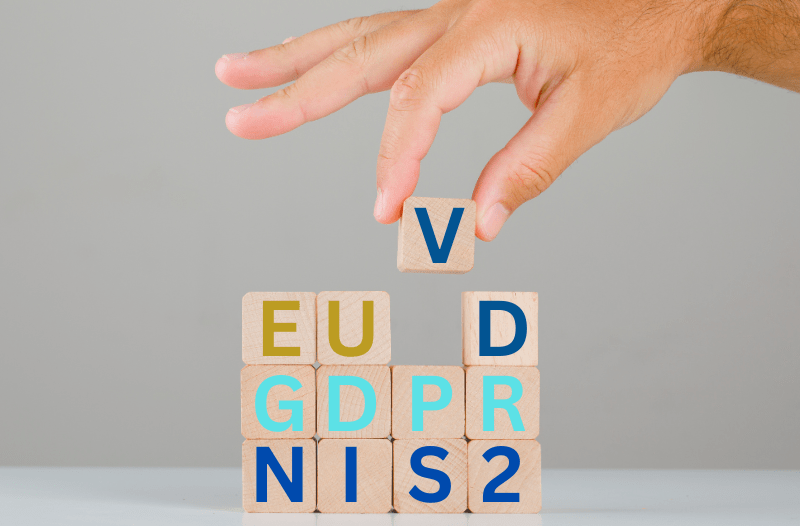
Europe takes a big step in cybersecurity sovereignty!
Last May, The European Union Agency for Cybersecurity (ENISA) has officially launched the European Union Vulnerability Database (EUVD) — a long-awaited project developed under the NIS2 Directive.
While MITRE’s CVE Program continues under uncertainty, EUVD provides Europe with:
🔹 More independence in vulnerability management
🔹 Alignment with EU regulations (NIS2, GDPR)
🔹 Focus on local priorities & critical sectors
🔹 A trusted platform for research and cooperation within Europe
This raises an interesting question:
👉 Could EUVD eventually reveal regional differences in CVEs, such as vulnerabilities specific to European software, industries, or even localized deployments?
Either way, this marks a milestone for Europe’s digital sovereignty and cybersecurity resilience.
ENISA’s new European Union Vulnerability Database (EUVD) initiative carries strategic importance from several perspectives:
Did you know? Under GDPR, any security vulnerability in the EU that involves personal data must be anonymized or carefully restricted. This means EUVD entries are handled with higher control and stronger privacy protection compared to the U.S., where CVE mostly shares technical details. In short, Europe’s approach ensures higher data protection standards for vulnerability reporting.
Advantages
Independence & Digital Sovereignty
By establishing its own vulnerability database, Europe reduces its reliance on the US-based MITRE CVE program. This represents a significant step toward “digital strategic autonomy.”
Legal & Regulatory Alignment
Built in compliance with the NIS2 Directive, EUVD reflects EU standards and provides a consistent, regulation-aligned resource for European companies.
Data Security & Privacy
Under the EU’s strict GDPR rules, sensitive security data will remain within EU borders, strengthening trust and confidentiality.
Local Priorities & Context
The EU can highlight vulnerabilities more specific to Europe’s critical sectors (energy, healthcare, finance, public infrastructure).
Research & Collaboration
EUVD fosters collaboration between European universities, CERTs, and security companies, creating a shared platform for Europe’s cybersecurity community.

Geographic Differences: CVE Perspective
Local Software: Applications, devices, or industrial systems widely used in Europe but less known globally may generate new CVE entries (e.g., specific industrial control systems in Germany).
Regulatory Differences: Vulnerabilities considered minor in the US might be classified as critical within the EU due to stricter definitions of critical sectors.
Language/Localization Vulnerabilities: Security flaws tied to European language-specific versions of software (e.g., French or German language packs) could appear more prominently in EUVD.
The launch of the European Union Vulnerability Database (EUVD) reflects Europe’s growing emphasis on digital sovereignty and regulatory alignment. While the CVE program provides a global, technical catalog of vulnerabilities, EUVD is designed to integrate legal, regulatory, and sector-specific considerations under EU law. The table below highlights key differences between the U.S. CVE system and the EUVD framework, illustrating both technical and policy-driven distinctions.
| Aspect | US (CVE / MITRE Context) | EU (EUVD Context) |
|---|---|---|
| Legal Framework | No overarching federal privacy law. More sectoral (HIPAA, CCPA in California). | Strong GDPR + NIS2 + upcoming Cyber Resilience Act (CRA). Unified, strict regulation. |
| Data Privacy & Disclosure | More permissive in vulnerability disclosure. Limited restrictions on what technical details can be published. | Vulnerability data subject to GDPR. EUVD may restrict or anonymize sensitive data to avoid personal data leaks. |
| Vendor Liability | Vendors often not directly liable for disclosed vulnerabilities. Focus is on patching. | CRA and NIS2 increase vendor liability. Vulnerabilities listed in EUVD may trigger compliance obligations. |
| Focus & Scope | Global technical catalog of vulnerabilities, independent of geography. | European-centric, with attention to critical sectors (energy, finance, health, public infrastructure) in EU context. |
| Regulatory Compliance | No direct regulatory link between CVE and US law. | Strong link: EUVD integrates with NIS2 and EU security directives. |
| Localization Issues | English-only, global standardization. | Multi-language support likely. Vulnerabilities in localized software (e.g., German/French language packs) may be included. |
| Strategic Autonomy | Dependence on MITRE/US governance. | Digital sovereignty: reducing dependency on US-controlled CVE system. |
| Industry Impact | CVE mainly informational. Companies decide compliance independently. | EUVD entries can create compliance duties and legal consequences for vendors in EU. |
While the EUVD primarily catalogs technical vulnerabilities, GDPR indirectly shapes how these vulnerabilities are handled and shared. Any reported flaw that could expose personal data must comply with EU privacy standards, requiring anonymization or restricted disclosure. Unlike CVE, which focuses on technical details alone, EUVD considers the European legal and regulatory framework, ensuring that data protection obligations are respected.
Real-World Example:
In 2019, for some popular web services (e.g., Marriott, Facebook), technical details were shared through CVE entries. However, in Europe, to mitigate GDPR violation risks, certain details were anonymized or published in a restricted manner via EUVD or local CERTs.
National or Regional Differences
Some countries maintain additional databases or national CVE lists based on their critical infrastructure and regulatory requirements:
- China (CNNVD): The China National Vulnerability Database reflects local priorities and security policies. It may publish entries on different schedules or with different classifications compared to MITRE CVE.
- Australia (AUSCERT & GovCERT): National CERTs issue alerts according to local priorities, but generally also track the global CVE.
- Other countries (Japan, Korea, Canada, India, etc.): National CERTs may issue localized notifications and reports based on regional needs.
Ref:
Database CVE, CWE, CISA KEV & Vulnerability Intelligence | CVE Find
 print("Hello, World!")
Hinterlasse einen Kommentar